Be yourself; Everyone else is already taken.
— Oscar Wilde.
This is the first post on my new blog. I’m just getting this new blog going, so stay tuned for more. Subscribe below to get notified when I post new updates.
Learn for your bright feature
Be yourself; Everyone else is already taken.
— Oscar Wilde.
This is the first post on my new blog. I’m just getting this new blog going, so stay tuned for more. Subscribe below to get notified when I post new updates.
Data warehouses provide businesses with the ability to slice and dice data and extract valuable insights from that data to make better business decisions. Used for reporting and data analysis, data warehouses act as a central repository for all or for portions of the data collected by an enterprise’s various systems.
Data warehouses are “fed” data from different data sources, such as relational/NoSQL databases or third-party APIs. All these data sources need to be combined into a coherent data set that is optimized for fast database queries.
Initially, data warehousing was only available as an on-premise solution — until Amazon Web Services launched Redshift in November of 2012. On-premises data warehouses are appliance-based, making them difficult to expand, while cloud data warehouses offer elasticity, scalability, and the ability to handle big data volumes while still using familiar models (such as the SQL/relational model used by Redshift).
If you are interested to Learn AWS you can enroll for free live demo AWS Online training
This article will define the Amazon Redshift cloud data warehouse and provide a few tips for those looking into Redshift as a potential solution. This is not a Redshift database design tutorial but a primer to give you an idea of what you would need to learn if you choose Redshift.
What Is Amazon Redshift?
First of all, let’s take a very quick look at Redshift and see how it differs from a normal relational database.
Amazon Redshift is a cloud data warehouse that allows enterprises to scale from a few hundred gigabytes of data to a petabyte or more (see the official documentation). This enables you to use your data to acquire new insights for your business and customers. Redshift is comprised of nodes called Amazon Redshift clusters. After provisioning the clusters, you can upload datasets to the data warehouse. You can then perform analysis queries on the data.
Redshift Nodes, Slices, and Table Distribution Style
In Redshift, a slice is a further subdivision of the data, and each node can have multiple slices. When you load data into Redshift, the rows of that data are distributed across the cluster’s slices according to the table distribution style. How data is distributed affects query performance. When performing joins and aggregations, data often needs to be sent over the internal network to other nodes for processing. Minimizing these redistributions is important in order to gain better performance. Also, we want to avoid some nodes doing a lot more work than the others, so it is also about distributing the computational load.
For each table you must specify the distribution style which can be ALL, EVEN, or KEY:
ALL distributes the data to all nodes. This can be great for read performance, as data is always local to the compute node, but it comes at the price of greater write cost and maintenance operations.
EVEN distributes the data evenly across nodes, making sure that each node gets its fair share of the data. This is suitable when the table does not need to be joined with other tables.
KEY distributes the data by a distribution key (DistKey). This key is one of the columns of the table. Distribution via a column is important for efficient joins with another table. By making the foreign key the DistKey of both tables, we ensure that the joined data of each row is always on the same node, thereby reducing the redistribution of data.
Each table must have a SortKey. Redshift always stores data sorted by the SortKey.
So while it is true that star and snowflake schemas are not always necessary anymore, there are new distributed system-level considerations that you must design for. Data locality and distribution are critical to getting the best performance. Ideally, we want joined rows to be as close as possible. If the data can exist on the same node, then even better. Data that needs to be moved over the internal network for joins means slower queries. You also have to take into account the cardinality of your filters. If you always perform filters based on today’s date and you have the date column as the DistKey, then you can end up with uneven loads. For example, that might mean that of your ten nodes, you always end up using only one node and hammering it while the others stay idle. So ideally, we want data locality at an individual row level, but data distribution of all the rows that match a given filter.
Redshift supports the use of primary and foreign keys but does not enforce them. What does that mean, exactly? Well, Redshift really cares about the DistKey (when using the KEY distribution style) and the SortKey. But Primary Keys and Foreign Keys can help the query optimizer to make better decisions and it can help people understand the data model better. But these constraints must be enforced by the applications feeding Redshift, as Redshift itself treats them as informational only.
Redshift Pricing
Redshift is priced according to the amount of data you store and by the number of nodes. The number of nodes is expandable. Depending on the amount of stored data, teams can set up anywhere from a single node (160 GB or 0.016 TB) to a 128 node cluster (with 16 TB capacity on a hard disk drive).
While we won’t be diving deep into the technical configurations of Amazon Redshift, there are technical considerations for its pricing model. Understanding of nodes versus clusters, the differences between data warehousing on solid state disks versus hard disk drives, and the part that virtual cores play in data processing is helpful for examining Redshift’s cost-effectiveness. For more details, see this article on Redshift pricing for data engineers.
Another useful article is this Hitchhiker’s Guide, showing how ironSource uses Redshift as raw data storage and how the pricing was worked out for that specific use case.
Next Steps
It’s pretty simple to get started and start learning how to use Redshift. There are a number of additional ways of getting your data into Redshift, and that might be your next step. If you have an existing data warehouse that you want to move to Redshift, you might be thinking about whether it will still perform well, given that it has a star or snowflake schema. The answer is yes, it can still perform well, and Amazon provides guidance on doing that. But you might want to consider going for a different schema that is easier to write to and leverage the columnar storage and MPP of the platform.
Learn for more AWS Course
Redshift is a great PaaS offering for data warehousing and Amazon just keeps making it better. It can now even read directly from S3. Most vendors in the data space have integrations with it, which make it a good choice for the future. But there are also the SaaS options that abstract away even more work for you. With these tools, you don’t need to think about data distribution and data locality anymore. They can reduce the time necessary to get from identifying a data source to producing value in the form of business insights and reduce the time spent optimizing table schema designs. So if you are new to data warehousing in general or new to data warehousing in the cloud, then take a look at the various options open to you in this new world of cheap storage and massively parallel computing.
AWS security groups:
Aws security groups acts as the ideal tool for securing EC2 instances. they are important tools to secure your cloud environment. security groups provide wide-ranging security functionalities on AWS.

These security groups act as a firewall for your Amazon EC2 instances for controlling inbound as well as outbound traffic. If you want to work on Amazon EC2, you need to assign it to a particular security group. They are very flexible. You can use the default security group and use it as you wish. With the help of AWS online training, you can write the corresponding code or use the Amazon EC2 to make the process faster.
Best practices of AWS security groups:
The best practices of AWS security groups are,
VPC flow logging: VPC stands for virtual private cloud. VPC flow logs contain the visibility into network traffic that crosses the VPC, As well as it can be used to find anomalous traffic and provide insight during security workflows. It is one of the AWS network monitoring services. It is used to detect security and access issues like overly permissive security groups and alert on anomalous activities. An anomalous activity means rejected connection requests or unusual levels of data transfer.
EC2: EC2 security groups have large ranges in ports open. With large port ranges, vulnerabilities could be exposed. An attacker can scan the ports and identify vulnerabilities of hosted applications but not easy to trace because it has large port ranges.
RDS: It permits instances, whenever VPC security groups associated with RDS instances. An entity in the RDS internet can establish a connection to your database.
Discrete security groups: Minimize the number of discrete security groups and decrease the risk of misconfiguration leading to accounts.
Outbound process: It controls the outbound access from the ports to required entities like specific ports or specific destinations.
Types of AWS of security groups:
The types of AWS security groups are improving clarity regarding their implementations on AWS. there are two types of security groups. The first one is EC2-classic and the second one is the EC2-VPC.
EC2-Classic: These security groups allow only the creation of inbound rules. And after launching the instance, you will assign a different security group to it. With the help of the EC2-Classic security group. you dont need to specify any protocol for adding a rule.
EC2-VPC: These security groups allow the besides inbound and outbound rules. In the EC2-VPC security group, you could change the assigned group. in EC2-VPC you need to specify the protocol.
AWS Security Group rules:
We can add or remove rules for the security group. Those rules are applicable to inbound traffic or outbound traffic.
The following are the basic rules for AWS security groups.
1. In inbound rules, the source of the traffic is either the destination port or port range. As well as the source can be another security group, an IPv4 or Ipv6 CIDR block, or a single IPV$ or Ipv6 address.
2. In Outbound rules, the destination for the traffic is the destination port or port range. A destination is also a security group, an IPV4 or IPV6 CIDR block and a single IPV4 or IPV6 address.
3. Every protocol that has a standard protocol number. You can specify ICMP as the protocol, then you can specify any or all of the ICMP types and codes.
4. A description of the security group rule help you identify it later. A description can contain 255 characters in length. It allowed characters are a-z, A_Z, 0-9, spaces, and special characters like “_”, “-“, #, @, etc.
The following diagram shows about rules in the security groups:

Type: This allows you to select commands protocols like SSH, RDP, or HTTP. you can also choose custom protocols.
Protocol: If you want to create a custom protocol, here you can specify a protocol like TCP/UDP, etc.
Port range: It is used to give default port or port range for your chosen protocol.
Source: It is a network subnet range for a specific IP address or another AWS security group.
Description: This field allows us to add a description of the rule that has been added.
If you are interested to Learn AWS you can enroll for free live demo AWS Online Course
How to create Security groups?
We can create security groups in different ways, such as the AWS CLI and AWS Management Console. Given below are the steps that help to create a security group according to your requirements.
1. First register into the AWS Management Console.
2. Then Choose the EC2 service.
3 And select the Security Groups in the Network &Security category. It is shown below.

4. Then choose the “create security Group “option.
5. Insert the name and description of the security group.
6. Choose an appropriate VPC.
7. Add the desired rules according to your requirements through the “Add Rule” option.

Limitations of AWS security groups:
There are a number of default AWS security group limits, that we have to remember while creating an AWS security group: they are
1. The VPC security groups per region must contain VPC=2500
2. Rules per security are equal to 120 and it doesn’t contain not more than 60 inbound and 60 outbound.
3. As well as Security groups per network interface are must equal 5.
Benefits for AWS security groups:
In this article, I have explained about AWS security groups and their creation. You can get more AWS Security group examples at AWS Online course I hope this gave awareness about the AWS security groups.
Overview of Serverless Architecture
Serverless does not mean that there is no server. It means you don’t have that server in which you are going to be managing and putting your entire application.Earlier, not very long ago, companies and the individuals used to buy and manage their hardware and software from networking infrastructure to data stores and servers to high-level responsibilities hiring specialized teams and the individuals for each trust. After that company starting outsourcing, some duties, and then the cloud came, which in combination.
With virtualization, it laid the ground for infrastructure as a service, platform as a service and similar services, which made companies and the individuals happy. These technologies and trends allowed for more outsourcing, and as a result of more focus on the business logic so, lead time has shortened, and the creation of software from requirements gathering to production radius software has become relatively more comfortable cheaper and quicker.

Then came the containerization wave, and we started to hear about deploying single instances and the units that use enough resources from the host, and the same thing happened. New services emerged as gas or container as a service.This article gives an overview about Building Serverless Applications on AWS
If you are interested to Learn AWS you can enroll for free live demo AWS Online Training
It is all for building software and deploying it more comfortable, cheaper, and quicker, all of that with reducing risks and increased efficiency. Serverless is nothing but a step forward in this movement or evolution. If you see each of these advancements i.e., cloud, infrastructure as a service, platform as a service, container as a service for each one of these a lot of burdens have been shifted from manual to outsourcing the management and maintenance of the infrastructure, the platform or even higher level of the staff. But still there are some things that have to be dealt like servers- the logic they acquire and everything from building server-side code that perform a lot of functionalities that are not associated to the market like routing, security, authentication and authorization and support and debugging the server-side of the application are still done by the developers, well Serverless came to solve one more problem that is building and maintaining the server-side of the application.
Serverless is building software by focusing more on business logic without thinking how you are going to serve your software like there is no server, just business logic. This doesn’t mean that there is no server-side work by developers at all. There could be some configuration and integration work, but all those problems like bugging service technologies as well as scaling and handling failovers. All of these problems that back-end developers used to go through are gone with Serverless.So, Serverless is building software without worrying about servers.
Why Serverless?
Serverless helps the user to build higher and modern level applications with the increase in speed, agility, and lowering the owner’s cost. Building a Serverless application means the developer doesn’t need to have to worry about operating or managing servers; instead, he can focus entirely on developing the core product i.e., the project he has been assigned. This reduces his effort, energy, and time. These all can later be utilized in building and developing the best quality products.
Benefits of Building Serverless Applications
No Server Management – Since there is no physical server, therefore, the user doesn’t have to manage any.
Flexible Scaling – Scaling of application is adjustable as per the capacity and has already been automated.
Pay for Value – Users have to pay for what we use.
Automated High Availability – Serverless offers automated fault tolerance and built-inn availability. User doesn’t have to worry about these capabilities because the applications have in-built services that take care of all these.
Some important Constrains for Building Serverless Applications
How to Building Serverless Applications?
Suppose an Enterprise has a client on the right side and the developers on the left side, and in between these, the main thing happens.So basically, we write business logic and deploy it to the provider say, Amazon which encapsulates code units in the form of functions which is where the fast acronym came from or role as a service and so whenever a client request comes to your application , a notification gets to a service that is listening for clients requests after that the server try to locate the code that is responsible for answering the request. When it finds it, it loads it into a container, and then the code gets executed. The answer gets constructed and sent to the client.
The other aspect of Building Serverless Applications is that you get to have all the responsibilities done for you through back-end as service like authentication and routing etc. You may have heard of Amazon API gateway before these technologies belong to Serverless computing. They are considered as back- end services, and you can use them as per your advantages, this is Serverless in a nutshell.
Benefits of Enabling Serverless Architecture
Overview of AWS Serverless Solutions
AWS Service comes down to offer different vital things.First, you should not have to think about any managing of servers i.e., no physical, no virtual, no containers, or anything that involves you thinking about an operating system or thinking about individual compute resources is something that you have to not think about when it comes to AWS Serverless.
AWS service should not scale with usage, so as requests come in, A.W.S. is going to take those requests and process them using a service product and respond as necessary.
User doesn’t have to pay for idle, there are number of stats that, out there in industry to talk about, how in most enterprises most of their I.T. resources are vacant 80% of the time, that is quite a lot of money being spent on funds that may or maybe never being used or being used very lightly and in the World of Serverless you don’t have to think about the capacity planning in the traditional way.
AWS security groups:
Aws security groups acts as the ideal tool for securing EC2 instances. they are important tools to secure your cloud environment. security groups provide wide-ranging security functionalities on AWS.
These security groups act as a firewall for your Amazon EC2 instances for controlling inbound as well as outbound traffic. If you want to work on Amazon EC2, you need to assign it to a particular security group. They are very flexible. You can use the default security group and use it as you wish. With the help of AWS online training, you can write the corresponding code or use the Amazon EC2 to make the process faster.
Best practices of AWS security groups:
The best practices of AWS security groups are,
VPC flow logging: VPC stands for virtual private cloud. VPC flow logs contain the visibility into network traffic that crosses the VPC, As well as it can be used to find anomalous traffic and provide insight during security workflows. It is one of the AWS network monitoring services. It is used to detect security and access issues like overly permissive security groups and alert on anomalous activities. An anomalous activity means rejected connection requests or unusual levels of data transfer.
If you are interested to Learn AWS You can enroll for free live demo AWS Online Training
EC2: EC2 security groups have large ranges in ports open. With large port ranges, vulnerabilities could be exposed. An attacker can scan the ports and identify vulnerabilities of hosted applications but not easy to trace because it has large port ranges.
RDS: It permits instances, whenever VPC security groups associated with RDS instances. An entity in the RDS internet can establish a connection to your database.
Discrete security groups: Minimize the number of discrete security groups and decrease the risk of misconfiguration leading to accounts.
Outbound process: It controls the outbound access from the ports to required entities like specific ports or specific destinations.
Types of AWS of security groups:
The types of AWS security groups are improving clarity regarding their implementations on AWS. there are two types of security groups. The first one is EC2-classic and the second one is the EC2-VPC.
EC2-Classic: These security groups allow only the creation of inbound rules. And after launching the instance, you will assign a different security group to it. With the help of the EC2-Classic security group. you dont need to specify any protocol for adding a rule.
EC2-VPC: These security groups allow the besides inbound and outbound rules. In the EC2-VPC security group, you could change the assigned group. in EC2-VPC you need to specify the protocol.
AWS Security Group rules:
We can add or remove rules for the security group. Those rules are applicable to inbound traffic or outbound traffic.
The following are the basic rules for AWS security groups.
1. In inbound rules, the source of the traffic is either the destination port or port range. As well as the source can be another security group, an IPv4 or Ipv6 CIDR block, or a single IPV$ or Ipv6 address.
2. In Outbound rules, the destination for the traffic is the destination port or port range. A destination is also a security group, an IPV4 or IPV6 CIDR block and a single IPV4 or IPV6 address.
3. Every protocol that has a standard protocol number. You can specify ICMP as the protocol, then you can specify any or all of the ICMP types and codes.
4. A description of the security group rule help you identify it later. A description can contain 255 characters in length. It allowed characters are a-z, A_Z, 0-9, spaces, and special characters like “_”, “-“, #, @, etc.
The following diagram shows about rules in the security groups:

Type: This allows you to select commands protocols like SSH, RDP, or HTTP. you can also choose custom protocols.
Protocol: If you want to create a custom protocol, here you can specify a protocol like TCP/UDP, etc.
Port range: It is used to give default port or port range for your chosen protocol.
Source: It is a network subnet range for a specific IP address or another AWS security group.
Description: This field allows us to add a description of the rule that has been added.
How to create Security groups?
We can create security groups in different ways, such as the AWS CLI and AWS Management Console. Given below are the steps that help to create a security group according to your requirements.
1. First register into the AWS Management Console.
2. Then Choose the EC2 service.
3 And select the Security Groups in the Network &Security category. It is shown below.

4. Then choose the “create security Group “option.
5. Insert the name and description of the security group.
6. Choose an appropriate VPC.
7. Add the desired rules according to your requirements through the “Add Rule” option.

Limitations of AWS security groups:
There are a number of default AWS security group limits, that we have to remember while creating an AWS security group: they are
1. The VPC security groups per region must contain VPC=2500
2. Rules per security are equal to 120 and it doesn’t contain not more than 60 inbound and 60 outbound.
3. As well as Security groups per network interface are must equal 5.
Learn for more information on Amazon EC2 you can enroll for free live demo AWS Online Course
Benefits for AWS security groups:
In this article, I have explained about AWS security groups and their creation. You can get more AWS Security group examples at AWS Online course I hope this gave awareness about the AWS security groups.
AWS cloud offers different features and has its application in modern applications and technology. In this article, let us discuss features of AWS cloud and its application in modern application.
Features of AWS cloud:
Amazon Web Services has a variety of features that make it reliable across different companies. Such AWS CLOUD features are as follows.
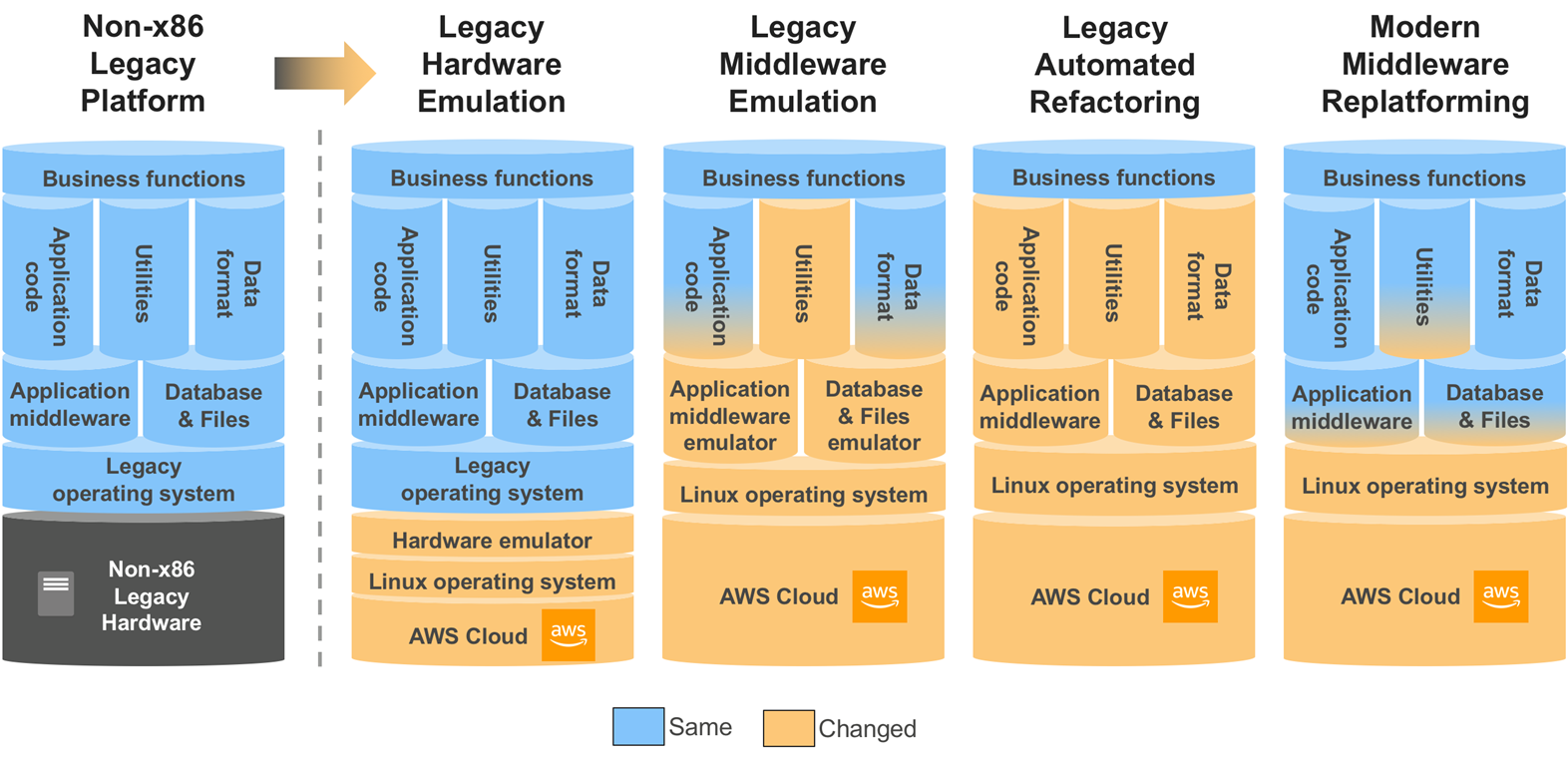
Mobile Safe Web Device Compliant:
This service includes two options:
i. AWS CLOUD Mobile Platform
This feature for both Android and IOS applies to Amazon Web Services. AWS cloud Mobile Hub helps and directs you toward the correct and compatible features for your app. It includes a console that will help you access AWS CLOUD resources that include mobile application creation, testing, and monitoring. It includes simple ways to pick and customize apps for the mobile device such as content delivery and push notifications.
If you are interested to learn AWS you can enroll for free live demo AWS Online Training
ii. AWS cloud Mobile SDK
Using this AWS cloud feature, your device can access Amazon Web Services directly, such as dynamo DB, S3 and Lambda. The Mobile SDK supports IOS, Android, Cloud, Native React, Unity, and more.
Database:
Amazon Databases offers a database as per your requirement, and they maintain the database they provide in full. Many of the repositories and uses they are:
Amazon Storage:
It offers archival, monitoring, and data backup storage for portable objects.
Amazon EBS: This offers volumes of block level storage for the use of EC-2 instances for persistent data storage. Safety and enforcement of most businesses depend on AWS. Amazon ensures the highest protection for the data they deliver. Amazon cloud apps, enables the company to scale and develop. Here, consumers pay only for the service they use. There are also no operating costs.
Security:
As most businesses rely on AWS, Amazon provides the data generated by them with optimum protection. AWS cloud apps, enables the company to scale and develop. Here, consumers pay only for the service they use. There are also no operating costs.
AWS cloud security interacts with instances at EC2. We have protocol protection and port level access. AWS cloud contains security rules to filter traffic from and into an EC2 case. Rules include four fields:
Application of AWS cloud in modern applications:
Nowadays it has become relevant to apply AWS cloud into modern applications. There are various ways to apply AWS cloud for modern applications. It involves different patterns and managing the AWS cloud for providing solutions to modern problems.
Architectural patterns: Micro services
Most companies, like Amazon, start their business with a monolithic application because it is the fastest, easiest system to develop. However, there is a problem with combining processes and running them as a single service.When one application process experiences a spike in demand, then the entire system needs to scale up to accommodate that one process’s load.
This is why microservices emerge as companies grow. With an architecture of Microservices, an application is composed of independent components. These components run the processes of each application as a service. We built services for business capabilities, such as an online shopping cart, and each service performs a single function. It runs independently and we can be managed by a single development team. Therefore, we can update, deploy and scale each service to meet the demand for specific functions of an application. The shopping cart, for example, can support a much larger volume of users when there is a sale.
Data management: Purpose-built databases
We build modern applications with decoupled data stores in which there is a one-to-one mapping of database and microservice, rather than a single database. This is an important change from conventional application architecture, as just as a monolithic framework faces challenges of scaling and fault tolerance as it expands, a database does as well. Furthermore, a single database is a single point of failure, and it is difficult for one database to satisfy the specific needs of a varied collection of microservices. By decoupling data together with microservices, you are free to select the database that best fits your needs. A relational database will still be the best option for many applications but many apps have different data needs.
get started your journey with AWS Online training Hyderabad
First, we described our software delivery process as best-practice models that provide a modeling and delivery framework for all network resources in a cloud setting. The “infrastructure as code” templates help our teams get off on the right foot, as the framework presents the entire technology stack for an application via code, rather than At Amazon, which means that teams customize their processes and implementations according to our needs.
Second, we began using automation to eliminate manual processes from the workflow for the product delivery. We easily check and release loads of code while reducing errors with automated release pipelines like continuous integration and continuous delivery (CI / CD).For CI teams combine their code changes into a central repository on a regular basis. We will then run automated builds and tests so we can spot problems early. With CD, our teams commit changes multiple times a day that flow out to production without any human touch.
At first, we found deploying without human intervention to be scary. However, after the team invested time in writing the right tests and fail-safes, the team found that not only did it dramatically increase our speed and agility; it also improved the quality of the code.
Operational model: As server less as possible
Modern applications have a lot of moving parts. Rather than just a single application and database, a modern application may be composed of thousands of services, each with a purpose-built database and a team releasing new features continuously.
When we say “server less,” we are referring to services that run without the need for infrastructure provisioning and scaling, have built-in availability and security, and use a pay-for-value billing model. Server less is not just Lambda. However, it is the entire application stack.
Application stacks typically consist of three components:
These servers less building blocks enable companies to construct applications that maximize the benefits of the server less model.
Security: Everyone’s responsibility
In the past, many companies treated security as if it was magic dust. It is something to sprinkle on an application after it is ready for release. This does not work well in a continuous release cycle, so organizations had to take a new approach to security, building firewalls around the entire application. However, this also introduced challenges. You need to apply the same security settings applied to every piece of the application. Then it becomes problematic if an application building with independent micro services.
For this reason, in modern applications, teams built security features into every component of the application. You carry on automated tests with each release. This implies the sole responsibility of the security team is not the security. Rather, we integrate with every stage of the development lifecycle. The teams of engineering, operations and compliance all have a role to play.
Conclusion:
I express my gratitude for reading this article. I hope you reached a conclusion about features and application of AWS cloud. You can learn more through AWS cloud online training.
What is AWS API Gateway?
Amazon Web Services API Gateway is among the wide range of AWS services offered by Amazon. This platform allows developers to create, publish, regulate, and secure APIs. You can create Application Programming Interface (API) to access different web services, Amazon Web Services, or to access the cloud storage.

Became an AWS Certified Expert in 25Hours
However, what is an API gateway?
An API Gateway is a software program that acts as the façade for Application Programming Interface. For defined microservices, the gateway provides a single point of entry. This is especially beneficial when the client uses multiple and incongruous APIs. One of the primary benefits that an API offers to developers is the ability to encapsulate the internal structure of an API in various forms, depending on the requirement.
To get in depth knowledge on aws you can enroll for free live demo AWS Online training
This becomes possible because apart from facilitating direct requests, API gateways can be used for multiple back-end services and to amass the results.Several API gateways are available in the market; however, the best APIs have features such as authentication, load balancing, dependency resolution, security policy enforcement, cache management, and SLA management.
Became an AWS Expert with Certification in 25hours
Benefits of Amazon API Gateway
If you are an AWS customer thinking of developing micro-services using the EC2 or Lambda, then the Amazon API Gateway encapsulates your services helping to reduce the drawback impact. Using the Management Console of AWS, you can create, regulate, oversee, and protect APIs through Amazon API Gateway.
Amazon API gateway provides several benefits for a developer looking to deploy micro-services on AWS. Below, we have listed five.
Flexible, Self-service, and Pay-as-you-go
As with all the services included in AWS, the Amazon API gateway also provides you with the option of paying as you go. The service does not require any monthly or annual subscription. There is no startup or minimum cost; you only pay for incoming calls and data processed out. To implement the API gateway, you do not have to go through the process of launching EC2 and the setup of gateway software. You can achieve it within a few minutes through the AWS Management Console.The API gateway allocates resources as the traffic towards the API increases and retracts as the traffic decreases without any manual configuration. This helps reduce the latency of incoming calls and outgoing data.
Get AWS Online Training
API Caching and Throttling
Instead of accessing the API backend for every call, you can enable the caching feature offered by Amazon API gateway; it will increase the performance and reduce latency. Size of the cache is the primary factor that determines the price of this service.
To avoid the misuse of API, which can create spike and overload the API, you can configure throttle and assign quota limits per API key.
The Amazon API Gateway integrates CloudWatch, an AWS monitoring service. This tool provides you with the dashboard through which you can view the matrix of incoming calls, latency, and errors.
Security
You can set up the API to request authorization and verify request to API access with the AWS services. The Amazon API Gateway provides you with authorization options such as Identity Access Management (IAM) and AWS Lambda functions. The IAM integrated with the gateway provides several tools such as the AWS credentials to access the API – access and secret keys. The AWS Lambda function can be used to verify tokens and if validated grant access to the API.
API Lifecycle Management
The Amazon API Gateway supports multiple versions of an API allowing calling of the previous version even when the latest version has been published. The platform allows you to maintain custom domains for each API versions while the endpoints remain the same. This helps in an easy rollback to the previous version of API.
Native Code Generation
After the deployment of an API, you can test the API from your application by generating SDKs. The SDK helps the developer by automatically managing retires and detecting network or other errors.
Drawback or Cons of Amazon API Gateway
Even though the API Gateway comes with numerous benefits, it is a new introduction in the API Gateway market and more developments can be expected with the product, similar to several other AWS products. These are some of the cons of Amazon API Gateway that we hope will be addressed in the near future:
Issues created due to 3rd-party API systems
Complex architecture
Problems in implementing the APIs
Lack of operational tools
Example of Amazon API Gateway Pricing
This example demonstrates the regional API that receives 2 million calls per month, where each API call response is 2kb. The caching feature is not used. The example shows the pricing for Ireland, US East, and US West.
Amazon API Gateway API call charges = 2 million * $3.50/million = $7.00
Total data transfer size = 2 KB * 2 million = 4 million/KB = 4 GB
Amazon API Gateway data transfer charges = 4 GB * $0.09 = $0.36
Total Amazon API Gateway charges = $7.00 + $0.36 = $7.36
Conclusion
The Amazon API Gateway has several benefits such as it is flexible, secure, allows easy integration with other AWS services; however, it also has some limitations. Nevertheless, the product is new and we can expect it to evolve further.
AWS firewall Manager is a service provider for Security Management. By that, you can easily make changes in your AWS WAF rules in your apps and Accounts. By using this, you can easily finish AWS WAF rules for Any application. When New apps are designed. Firewall manager helps in bringing the new resources (of AWS Online Training) and apps into action with the same rules from the starting Day. And here you have one service to create firewall rules and security policies. By this you will know Latest Trends In AWS Firewall Manage

Benefits in AWS Firewall:
1)Fast Response:
By this your security team can recognize threats, so they can overcome the attack. for Instance, if we take Amazon Guard Duty. Its works are to find out unwanted Ip Address, that which will access your application. You can fastly move firewall protection.
2) Moving rules For AWS WAF:
AWS firewall Integrate managed rules for AWF WAF. That provides a simple method to move pre-configured WAF rules of your apps. You can select Managed rule provided by AWS marketplace seller. And it Moves your application smoothly. In your application load balance and Amazon Cloud Front. Identically we have seen Latest Trends In AWS Firewall Manager.
If you are interested to learn AWS you can enroll for free live demo AWS Online Training
3) Managing your rules simply:
AWS firewall Manager is Implemented with AWS organizations. By that, you can Implement AWS WAF on multiple AWS accounts at the same time. you can make a group of rules and Design Polices across your Entire application.
4) Enforcing old and new Applications:
AWS firewall can start old and newly designed resources with Security policies. Service can Recognize new application Amazon Cloud Front or load balance when they are started on multiple accounts.
Features of AWS firewall:
You can move the AWS WAF rules on AWS resources. That exists in the future. AWS gives the client to apply WAF rules and managed rules for AWS WAF. On a bunch of resources. Which Includes resources on Amazon Cloud-front accounts and Application Load Balance. You have an option to choose to be messaged when the latest resource is created. Latest Trends In AWS Firewall Manager
Multi Accounts:
In was firewall manager, you can resource by account, by tag.your security group can enable D Dos protection for all resources within the accounts in the company. Firewall manager Integrates with AWS clients. And it automatically gets the list of AWS accounts in the company.
Protection by cross-account policy:
In this first, you have to Design Protection policies. So this protection policies can define a team with AWS rules. Then give a path for policy to cover certain AWS accounts. Firewall manager will Move WAF rules on to the resources by the policy. By this, we have got some knowledge on Latest Trends In AWS Firewall Manager
Infrastructure Rule set:
With AWS fire fall manager you can do protection policies in an Infrastructure manner. Applied rules are under control if any unwanted mishandling happens.
Compliance Notifications with Dashboard:
AWS firewall gives you a visual Dashboard, where you can fastly view your AWS resources. And you can Identify non-meeting resources and you can give suitable action. You will get notified when you have modifications through SNS.
Get started with AWS firewall manager:
Log in or sign up into AWS management Dashboard, manage rules on accounts and applications. After that start with AWS, firewall with WAF. Make sure that old and existing applications command with security policies from the first Day. Then after starting building your security Policies. Start designing your security policies. Follow the AWS get started firewall manager security policy.so it is good to know the Importance of Latest Trends In AWS Firewall Manager
Key Points of AWS Firewall Manager:
You have a single model to respond quickly if any Incident happens. If we take an example by blocking IP address with AWS firewall manager. company security group can be notified so they can react to threat Immediately.
At last AWS Online Course is firewall manager can do Integrations with Managed rules for AWS WAF. And this will provide you simple way to move already configured rules in your Applications. By this, the points will explain Latest Trends In AWS Firewall Manager
Docker is an open-source container-based platform that automates the deployment of applications on the container. Containers are small software packages that communicate with each other through a well-defined gateway. Docker containers can run on-premises in the datacenter as well as in the cloud, Where Docker image containers run on Linux and Windows.

AWS or Amazon Web Services is a cloud computing platform that offers on-demand, reliable and scalable cloud services to its users. It provides easy to use cloud solutions. It started to serve long ago with few services but today it offers more than 100 cloud services.
EKS or Elastic Kubernetes Service runs Kubernetes on the AWS platform across multiple AWS zones. It detects and replaces unwanted control plane nodes automatically. It also provides updates on-demand with zero downtime. Kubernetes is an open-source platform for deploying, managing and scaling the container-based application on automation.
If you are interested to learn AWS you can enroll for free live demo AWS Online Training
EKS is the best place for running Kubernetes. As the EKS has integration with a lot of services such as Group Scaling, Virtual Private Cloud, AWS IAM, etc, this makes the Amazon EKS provide seamless work experience to monitor, scale, load-balance, and deploy the applications. It provides all the benefits of the community to use open-source tools.
Deploy local Docker image to Kubernetes
Here, we will check the running of the local Docker image using Minikube. It becomes easy to deploy Kubernetes locally using the Minikube.
In the following steps, we will try to understand the deployment of Docker image to Kubernetes.
At first, we need a Kubernetes cluster. It could be running somewhere. The second one is to have a Docker image of the application somewhere in the image repository.
Now we see the step-wise deployment.
$ kubectl run my-app –image=gcr.io/some-repo/my-app:v1 –port=3000
deployment “my-app” created
The above application uses port 3000. If the application doesn’t support the port, then we can remove it. To check the status of the container running in the cluster, we will use the following command.
$ kubectl get pods
NAME READY STATUS RESTARTS AGE
my-app 1/1 Running 0 10m
$ kubectl get svc
NAME TYPE CLUSTER-IP EXTERNAL-IP
my-app LoadBalancer 10.11.452.237 56.170.30.123
Here, it is taken as an example. The IP address may differ depending upon the system and network.
If there is any update need, then we can use Kubernetes rolling update to upload a new image.
$ kubectl delete deployment my-app
$ kubectl delete svc my-app
The above example commands show the deployment of Docker image using the Kubernetes. To know more about the Docker image creation and its usage towards Kubernetes, one can opt for Docker Online Training from various online sources.
Amazon Elastic Kubernetes Service (Amazon EKS)
Amazon EKS is a professionally managed service that helps users to run Kubernetes on AWS without the need of maintaining their own control plane. It manages all the relevant tasks such as upgrading, monitoring, patching, etc.
The following are the few benefits of Amazon EKS.
There are many uses of Amazon EKS as it has a great community support with open tools. It helps in smooth running of applications.

Running Kubernetes with Amazon EKS
Here we will discuss with a demo with respect to launch an application on the Kubernetes cluster using Amazon EKS. The following is the process.
Moreover, it requires an AWS account with an active subscription. It needs to log with the account credentials. It also needs to install the updated version of the AWS CLI to run the application smoothly.
The process starts by logging into the AWS account. Here, we need to create an AWS IAM service role, using the AWS IAM console. Here it needs to select AWS service as well as EKS service. We need to give some name to this role.
It also requires creating a VPC cluster for this. Here we need to select a template. After specifying the details, we can proceed further.
The second step starts with the creation of the Amazon EKS cluster. Again the same process repeats. We need to create a cluster from the relevant Amazon EKS console. After filling the required details, our cluster gets ready.
Later we need to create Kubernetes CLI using kubectl to make communication with the Kubernetes cluster. It needs to have the latest version of the AWS CLI. In the next step, we need to create kubeconfig file for the cluster. It requires applying some commands and codes to create this file.
In the later step, we have to create an application with the file name nginx.yaml and to be filled with relevant details. After creating the application we need to activate the nginx service.
After this, we have to run this application to capture the relevant external IP address. Later, we need to connect this IP address with a web browser to view the respective nginx application.
Here, we will the status of running Kubernetes with Amazon EKS. In the final step, we need to clean the whole experiment process.
Thus, the above steps explain the process of running containerized applications using Amazon EKS. Hence, you people have got an basic idea of creating an AWS account to use it for running application.
Amazon EKS pricing
Its pricing depends upon the usage of the services. The nominal cost of using each Amazon EKS cluster needs to pay $0.10 per hour. We can use a single Amazon EKS cluster to run different kinds of applications. The pricing may vary with the type of usage. There are different plans in these criteria such as; AWS support plan, Amazon Cloud services, Amazon EC2, etc. Each plan has a different pricing system.
So, the above article explains the usage of Docker on AWS EKS (Elastic Kubernetes Services) with Kubernetes. It gives an overall idea about how the Docker image deployment is done using Kubernetes. It also explains the basics of Amazon EKS works and the running of Kubernetes using Amazon EKS. It shows the step-wise implementation. It can be learned from many industry experts through various channels. Expertise knowledge can create great opportunities in this field. But it needs to have good understanding skills. Hope this will be helpful for the enthusiasts of learning Kubernetes, AWS, and Docker. To get more knowledge on the Kubernetes and its different uses, one can opt for Kubernetes Online Training from various online sources. This learning will enhance the skills along with career growth.
Amazon Web Services (AWS) is a popular solution for companies building a DevOps practice across technical teams. Since there are so many products within the AWS ecosystem (165+), gaining expertise with on-platform DevOps practices requires extensive training. Enter the AWS DevOps Engineer Professional Certification. This advanced certification builds proficiency in the overall management and operation of the AWS cloud platform through the application of DevOps practices.

What is DevOps?
“DevOps” is a technical philosophy in software delivery that improves collaboration across the teams who build/deploy code and oversee systems.
Before DevOps technical teams at organizations were not well integrated. The software development, data, QA, and IT operations teams often had misaligned goals that slowed down production cycles. DevOps breaks down organizational silos by aligning the goals and workflow of technical teams. These groups collaborate on the entire software lifecycle from design and development to testing and deployment.
If you are interested to Learn AWS and DevOps you can enroll for free live demo AWS Online Training
The AWS platform has tools that foster DevOps practices, but organizations will need to invest in training to fully leverage these tools. My new course, the AWS DevOps Engineer Professional Certification, can help train your team on these key skills. With over 20 hours of hands-on labs and training, the course will drastically improve the DevOps knowledge of your team members. Find out more about how Udemy for Business can help train your team on AWS DevOps skills.
5 principles that drive a DevOps culture in AWS
Even those experienced with AWS may not be leveraging its most beneficial services. With over 165 products, professionals likely don’t even know about all of AWS’s DevOps tools.
To power organization-wide efficiencies and build team confidence in DevOps practices, the AWS DevOps Engineer Professional certification focuses on five DevOps principles and how they relate to the AWS platform.
Continuous integration (CI), refers to code pushed often to a code repository, such as AWS CodeCommit. Then, a testing server like AWS CodeBuild checks the code as soon as it’s pushed and developers receive feedback on the pass/fail status of the tests. This allows product teams to find and fix bugs early in software development, thereby delivering code faster and deploying code often.
Continuous delivery (CD) ensures software is released reliably whenever needed and that deployments happen quickly and often. This allows development teams to move away from one release per quarter to around five releases every day. Powering that many releases per day requires automating the deployment through AWS services like CodeDeploy, Jenkins, or Spinnaker. Continuous delivery, though, does require a manual step to approve the deployment.
Continuous deployment differs from continuous delivery in that it’s entirely automated. Every code change is deployed all the way to production. There are no manual approval interventions. AWS tools used here include Code Deploy, Elastic Beanstalk, and Cloud Formation. The whole CI/CD process is orchestrated with AWS Code Pipeline.
Cloud Formation helps to maintain version control and increases team productivity, thanks to the ability to destroy and recreate infrastructure as needed. It also helps engineers avoid recreating the wheel as templates are available for outlining infrastructure needs and to create those instances in the right order with the exact configuration.
Cloud Watch provides further visibility into the many cloud resources and applications a company uses within AWS. These applications produce metrics that Cloud Watch monitors in the form of automated dashboards and notifications alerting teams when predetermined events occur so that swift action can be taken if needed.
AWS re:Invent, Amazon Web Services, Inc. (AWS), an Amazon.com company (NASDAQ:AMZN), announced that customers can now run AWS Fargate for Amazon Elastic Kubernetes Service (EKS), making it easier for customers to run Kubernetes applications on AWS. AWS Fargate, which provides serverless computing for containers, has substantially changed the way developers manage and deploy their containers. Launched two years ago to work with Amazon ECS, AWS Fargate has been broadly requested by Kubernetes customers. Now, with AWS Fargate for Amazon EKS, customers can run Kubernetes-based applications on AWS without the need to manage servers and clusters.
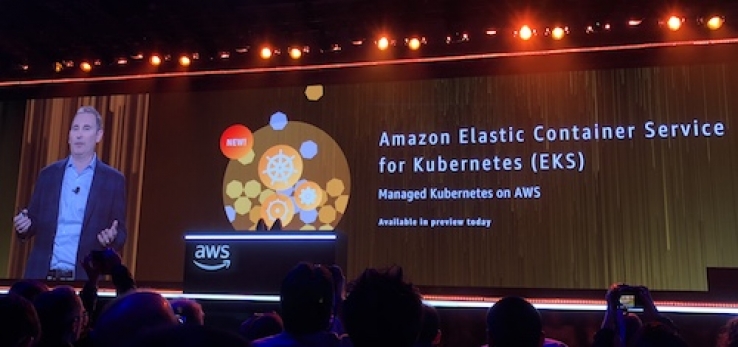
Containers have become very popular because they allow customers to package an application and run it anywhere, improve resource utilization, and make it easier to scale quickly. Most cloud providers only offer one container offering built around Kubernetes. AWS built Amazon Elastic Container Service (ECS) before container orchestration gained wide interest and, because it is built on AWS Application Programming Interfaces (APIs), it integrates easily with other AWS services. Today, there are hundreds of thousands of active clusters managed by Amazon ECS.
If you are interested to Learn AWS you Can enroll for free live demo AWS Online Training
Over time, as Kubernetes became popular, many customers started running Kubernetes on top of Amazon EC2. Over 80% of the Kubernetes workloads in the cloud are running on AWS, according to Nucleus Research. Customers like the broad community and openness of Kubernetes, but it’s challenging for them to manage Kubernetes on their own, which is why they have asked AWS to help them solve this problem. A year and a half ago, AWS launched Amazon EKS, a managed Kubernetes service to make it easier to manage, scale, and upgrade Kubernetes clusters. Amazon EKS has been very popular and has given Kubernetes customers an extremely flexible way to model and run their applications. While Amazon EKS handles the Kubernetes management infrastructure, customers still need to patch servers, choose which Amazon EC2 instances to run on, patch the instances, scale cluster capacity, and manage multi-tenancy. These customers have asked AWS to further simplify running Kubernetes on AWS.
AWS Fargate for Amazon EKS combines the power and simplicity of serverless computing with the openness of Kubernetes. With AWS Fargate there is no longer a need to worry about patching, scaling, or securing a cluster of Amazon EC2 instances to run Kubernetes containers in the cloud. When customers run Kubernetes applications on AWS Fargate, it automatically allocates the right amount of compute, eliminating the need to choose instances and scale cluster capacity. Customers only pay for the resources required to run their containers, thereby right-sizing performance and cost. AWS Fargate for Amazon EKS also provides strong security isolation for every pod by default, removing the need to manage multi-tenancy. With AWS Fargate for Amazon EKS, customers can focus on building their applications rather than spending time patching, scaling, or securing a cluster of Amazon EC2 instances.
“AWS Fargate has made it so much easier for Amazon ECS customers to manage containers at the task layer versus worrying about servers and clusters,” said Deepak Singh, Vice President of Containers at AWS. “Our Amazon EKS customers have been clamoring for us to find a way to make Fargate work with Kubernetes, and we’re excited to do so today. With AWS Fargate, Kubernetes customers can truly take advantage of the elasticity and cost savings of the cloud when running their Kubernetes containers, and don’t have worry about patching servers, scaling clusters, or managing multi-tenancy.”
AWS Fargate for Amazon EKS is available today in US East (N. Virginia), US East (Ohio), Europe (Ireland), and Asia Pacific (Tokyo), with more regions coming soon.
Square helps millions of sellers run their business from secure credit card processing to point of sale solutions. “As we modernize our stack with EKS, we are always looking for opportunities to increase our security posture and lessen our administrative burden,” said Geoff Flarity, Engineering Manager for CashApp, Square. “We’re excited by the potential for Fargate for EKS to provide out of box isolation and ensure a secure compute environment for our applications with the highest level of security requirements. In addition, the ability to right size portions of our compute consumption, ensuring optimal utilization without having to spend cycles on capacity planning or operational overhead, is extremely compelling. This is without a doubt the most exciting Kubernetes announcement of the year.”
National Australia Bank (NAB) is one of the largest financial institutions in Australia and offers a wide array of personal banking financial solutions to its customers. “Amazon ECS has already reduced NAB’s microservice development time by a factor of 10. With AWS Fargate for Amazon EKS, we expect to improve this even further by enabling low touch Kubernetes cluster management at scale,” said Steve Day, EGM of Infrastructure Cloud and Workplace, NAB. “By removing the need for infrastructure management, we expect AWS Fargate for Amazon EKS to reduce our development costs on new projects by 75%. Over the next 12 months, migrating to AWS Fargate for Amazon EKS will enable 100 NAB service teams with a managed microservices based platform to break down 50 monolithic applications into modern architectures.”
GitHub brings together one of the world’s largest community of developers to discover, share, and build better software. “GitHub is committed to being the home for all developers, which includes providing them with great experiences across a wide range of tools and platforms,” said Erica Brescia, COO, GitHub. “AWS is an important platform for developers using GitHub Actions and we’re proud to collaborate with them on the launch of Amazon EKS for Fargate. Our solution makes it easier than ever for developers to focus on getting their code to the cloud with a minimum of operational overhead.”
Babylon Health is a health service provider that provides a range of services including remote consultations with doctors and health care professionals via text and in-app video messaging. “Amazon EKS is vital in our mission to offer accessible and affordable healthcare across the globe,” said Jean-Marie Ferdegue, Director of Global Platform Engineering, Babylon Health. “By using EKS and EC2 Spot instances, we have a lightning fast micro-service architecture where 300+ containerised applications are built and deployed in a highly decoupled manner. We now have unprecedented high availability across the globe while reducing the average time to bring a change to the stack from four weeks to a matter of hours. Our offering is focused on affordability and the cost reduction of 40% across our critical clusters is a key part of delivering this vision. The availability of Fargate for EKS will shift the focus from running and operating complex orchestration platforms to operating a secure and scalable health system. This maximizes our engineering effort, both in terms of time and money.”
HashiCorp is an open source software company that enables organizations to have consistent workflows and to provision, secure, connect, and run any infrastructure for any application. “Amazon EKS for Fargate enables developers and operations teams to offload the heavy lifting of infrastructure management to AWS,” said Armon Dadgar, co-founder and CTO, HashiCorp. “EKS for Fargate allows development teams to be more self-sufficient by abstracting the minute-to-minute management of their infrastructure and freeing up more time to focus on best practices and delivery. By supporting EKS for Fargate on launch day, HashiCorp Terraform provides users with a turnkey solution for provisioning Kubernetes workloads that makes use of best practices such as infrastructure as code.”
Datadog is a monitoring service for cloud-scale applications, providing monitoring of servers, databases, tools, and services through a SaaS-based data analytics platform. “Containers and orchestration are becoming a standard practice for organizations looking to operate efficiently at scale,” said Ilan Rabinovitch, VP of Product Management, Datadog. “We’ve seen wide adoption of AWS Fargate throughout our customers. We are excited to see support extend to cover Amazon EKS, so that our customers can further simplify management of Kubernetes at scale on AWS.”
About Amazon Web Services
For 13 years, Amazon Web Services has been the world’s most comprehensive and broadly adopted cloud platform. AWS offers over 165 fully featured services for compute, storage, databases, networking, analytics, robotics, machine learning and artificial intelligence (AI), Internet of Things (IoT), mobile, security, hybrid, virtual and augmented reality (VR and AR), media, and application development, deployment, and management from 69 Availability Zones (AZs) within 22 geographic regions, with announced plans for 13 more Availability Zones and four more AWS Regions in Indonesia, Italy, South Africa, and Spain. Millions of customers—including the fastest-growing startups, largest enterprises, and leading government agencies—trust AWS to power their infrastructure, become more agile, and lower costs.

 AWS Online Training